Do Front and Rear Brake Pads Wear Out at the Same Rate?
August 31, 2026
Front and rear brake pads do the same basic job, but they do not always wear at the same rate. In most vehicles, the front brakes handle more of the stopping force because weight shifts forward when you press the brake pedal.
That usually means the front pads wear faster, but not every vehicle follows the same pattern. Brake system design, driving habits, electronic stability systems, parking brake setup, and even a sticking caliper can change which end wears first. At our shop, we compare all four brakes instead of assuming the fronts are automatically the ones that need service.
Front Brakes Usually Handle More of the Work
When a vehicle slows down, weight transfers toward the front axle. The front tires press harder into the road, so the front brakes can create more stopping force without locking the wheels.
That is why many vehicles use larger front rotors and calipers. Under normal driving, the front pads often wear down sooner than the rears because they do more work on each stop. On a car that spends most of its time in city traffic, that difference can become pretty noticeable.
Rear Brakes Still Do Important Work
The rear brakes are not just along for the ride. They help keep the vehicle stable, balance braking force, and prevent the front brakes from doing everything by themselves.
Modern brake systems also adjust front-to-rear braking electronically. Depending on speed, steering input, traction, and vehicle load, the rear brakes can be used more than drivers expect. That means rear pads can sometimes wear faster than the old rule of fronts always go first would suggest.
Electronic Stability Control Can Increase Rear Brake Wear
Traction control and stability control systems can apply individual brakes without you pressing the pedal very hard. The system uses that braking force to control wheelspin or help the vehicle follow the direction you are steering.
Some vehicles use the rear brakes frequently during these corrections. A driver who deals with slippery roads, aggressive cornering, or repeated traction-control activity can see more rear pad wear than expected.
We sometimes find rear pads surprisingly low while the fronts still have plenty of material left. That does not automatically mean something is wrong. The brake system itself could simply be using the rear pads more often.
A Sticking Caliper Can Make One End Wear Much Faster
If the difference is extreme, we start looking for a mechanical problem. A sticking caliper piston, seized slide pin, or restricted brake hose can keep one brake partly applied after you release the pedal.
That pad wears constantly, not just when you brake. One side can be nearly metal-to-metal while the other side of the axle still looks good.
Clues that point toward abnormal wear include:
- One wheel producing much more brake dust
- A burning smell after driving
- One rotor running much hotter than the others
- The car pulling while braking
- One inner pad much thinner than the outer pad
- A wheel that does not turn freely when lifted
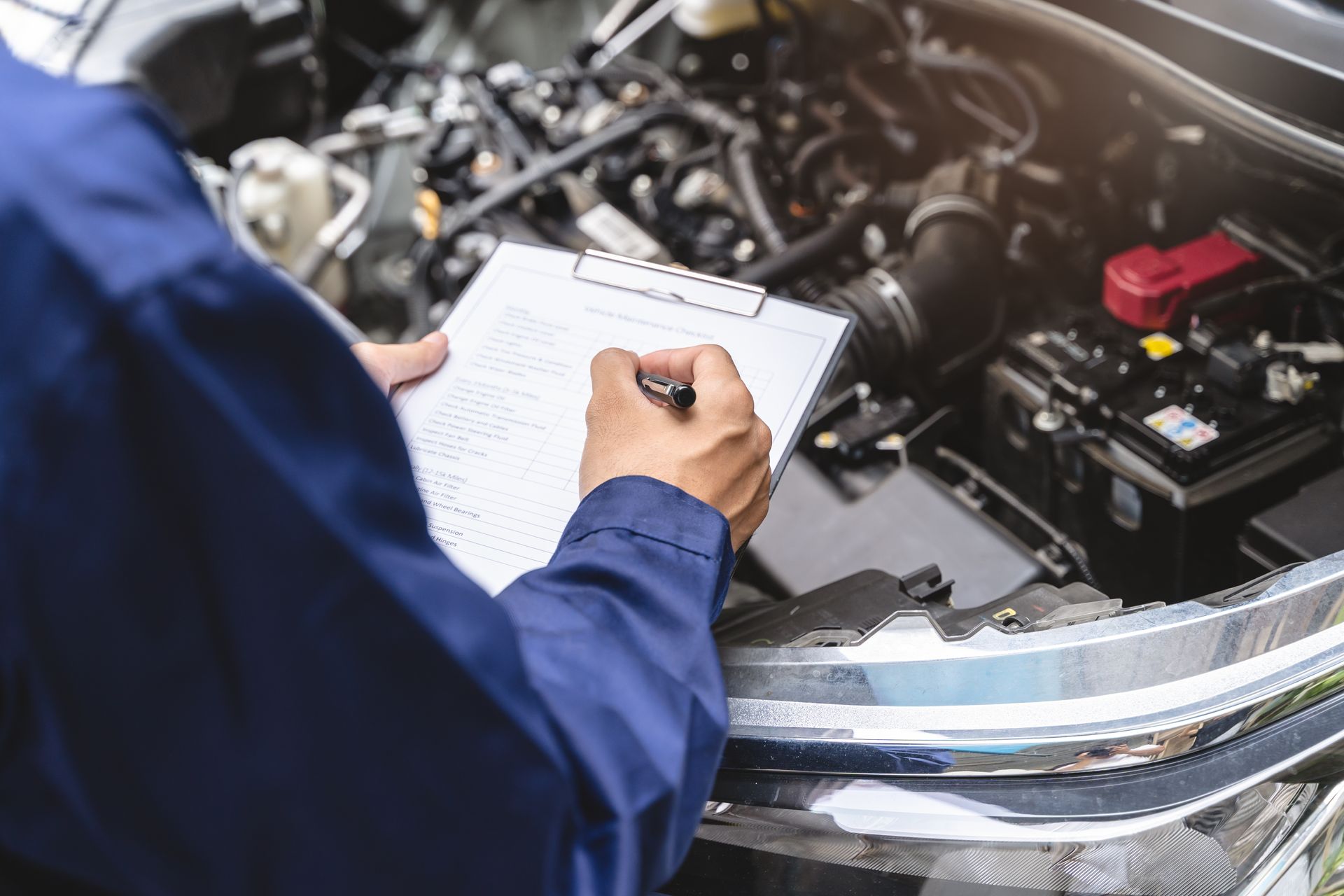
During an inspection, we compare pad thickness side to side as well as front to rear. That helps us separate normal brake balance from a caliper or hardware problem.
Driving Habits Change Which Brakes Wear First
Where and how you drive greatly affects brake life. Stop-and-go traffic works the entire system hard, while long highway trips barely use the brakes at all.
Vehicles that carry heavy loads can put more work on the rear brakes because more weight is over the back axle. Hills also change the picture, especially if the driver brakes repeatedly on long descents.
Even the way you come to a stop changes wear. Frequent hard stops create more heat than slowing earlier with lighter pedal pressure. Over thousands of stops, those differences add up.
Rear Parking Brake Designs Can Affect Wear
Some vehicles use the rear brake pads as part of the parking brake system, while others use a separate small drum brake inside the rear rotor.
If the parking brake does not release completely, the rear pads or shoes can drag and wear quickly. Electronic parking brakes can also create problems if a caliper actuator, mechanism, or service procedure is not working correctly.
At our shop, we check the parking brake operation when rear wear looks unusual. Replacing the pads without finding out why they wore out early only puts the new set into the same situation.
Replace Pads Based on Condition, Not Front or Rear Assumptions
No rule requires replacing front and rear brake pads together. If the fronts are worn and the rears have plenty of usable material, replacing only the front pads can be completely reasonable.
The same applies in reverse. We measure the remaining friction material, check rotor condition, compare wear across the axle, and look for anything that is keeping a brake applied.
Regular maintenance helps because we can track how quickly each axle is wearing from one service to the next. That gives a much better picture than waiting until one set starts grinding.
Get Brake Pad Service In Bloomingdale, GA, With Elton's Auto
If you are not sure whether your front or rear brakes are wearing faster, Elton's Auto in Bloomingdale, GA, can measure the pads, inspect the rotors, and check the calipers and brake hardware for uneven wear.